Purple foods and gut health : why anthocyanins are the next big thing in microbiome science

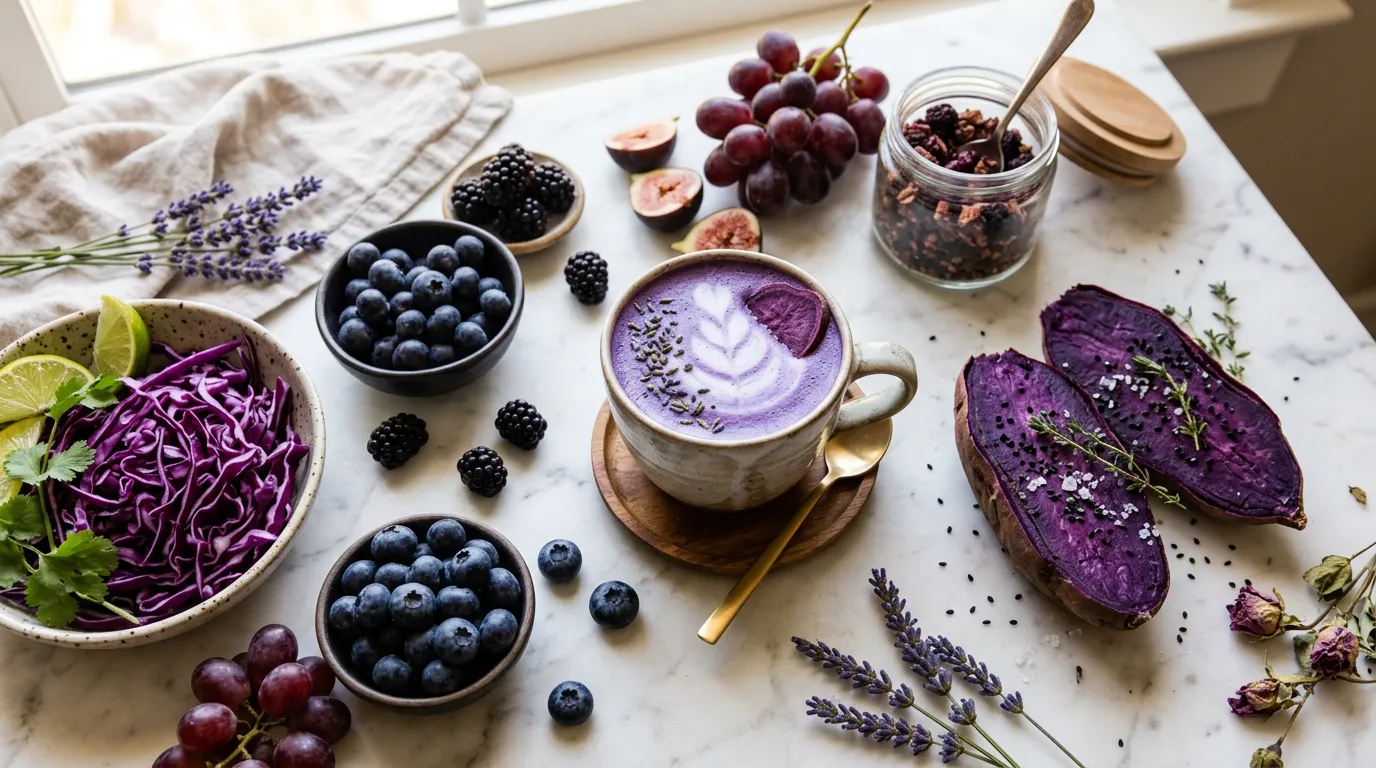
Nutrition science has long understood that the colour of plant foods is not merely decorative. The pigments that give fruits and vegetables their characteristic hues are often biologically active compounds whose presence signals a specific category of nutritional benefit. Green vegetables owe their colour to chlorophyll and signal the presence of folate, vitamin K and magnesium. Orange and yellow foods get their colours from carotenoids that the body converts to vitamin A. The deep purple, violet and blue colours of foods like blueberries, red cabbage, purple grapes, açaí and ube are produced by anthocyanins, a class of plant pigments that has moved from the periphery to the centre of microbiome research in the past decade.
The evidence emerging from gut microbiome studies positions anthocyanins as among the most microbiome-active compounds in the plant kingdom, with effects on bacterial diversity, gut barrier integrity and systemic inflammation that may explain a significant portion of the health benefits historically attributed to purple and blue plant foods. Understanding what anthocyanins are, how they interact with the gut microbiome and which food sources deliver them most effectively is becoming increasingly relevant for anyone interested in evidence-based approaches to digestive and overall health.
The ube latte, explored in our detailed guide on ube latte and gut health, is one of the most anthocyanin-rich beverages available, making it a practical and delicious vehicle for incorporating these compounds into a daily wellness routine.
What anthocyanins are and how they survive digestion
Anthocyanins are water-soluble flavonoid pigments produced by plants as part of their defence and signalling systems. They protect plant tissues from UV radiation, attract pollinators and seed dispersers, and deter herbivores. In humans, their biological effects operate through mechanisms that are increasingly well characterised despite the complexity of their metabolism.
The digestion of anthocyanins is partial and pH-dependent, which was for a long time interpreted as a limitation of their bioavailability. The acidic environment of the stomach preserves anthocyanins in their more stable flavylium cation form, but as they move into the more alkaline small intestine they undergo structural changes that were historically thought to represent degradation. More recent research has reframed this picture significantly.
A substantial proportion of ingested anthocyanins reaches the colon intact or as metabolites that retain biological activity. Once in the colon, they interact directly with the gut microbiota, and this interaction is now understood to be central to their health effects. The gut microbiota metabolises anthocyanins into smaller phenolic compounds including protocatechuic acid, phloroglucinaldehyde and various hydroxycinnamic acid derivatives, many of which are biologically active and absorbed into the systemic circulation. The microbiota is therefore not just a passive recipient of anthocyanin exposure but an active participant in their metabolism and a determinant of what biological effects they ultimately produce.
How anthocyanins selectively feed beneficial gut bacteria
The prebiotic effects of anthocyanins are among the most consistently demonstrated findings in the field, with evidence across in vitro, animal and human studies supporting their ability to selectively modulate gut bacterial populations in directions associated with improved health outcomes.
Lactobacillus and Bifidobacterium species consistently increase in abundance following dietary anthocyanin intervention, across multiple study designs and using multiple anthocyanin sources. A 2019 randomised controlled trial published in the American Journal of Clinical Nutrition demonstrated that daily blueberry consumption significantly increased Bifidobacterium adolescentis and Lactobacillus acidophilus compared to placebo after six weeks, with accompanying reductions in systemic inflammatory markers.
Akkermansia muciniphila, a bacterium associated with gut barrier integrity and metabolic health whose abundance tends to be reduced in individuals with obesity, type 2 diabetes and inflammatory bowel conditions, is one of the most anthocyanin-responsive species in human gut microbiome studies. Several human intervention trials with polyphenol-rich diets have demonstrated significant increases in Akkermansia abundance, with the anthocyanin fraction of the intervention strongly implicated as a driver.
Simultaneously, anthocyanins appear to suppress several pathobiont species, bacteria that are tolerated at low abundance but associated with inflammation and gut dysfunction when they overgrow. Bacteroides fragilis and certain Clostridia species are consistently reduced following anthocyanin-rich dietary interventions in studies where baseline microbiome dysbiosis was present.
The gut barrier protection effects
Beyond their prebiotic activity, anthocyanins have direct effects on gut barrier integrity that operate independently of the microbiome. The gut epithelial barrier is a single-cell-thick layer whose tight junction proteins determine paracellular permeability, the degree to which compounds from the gut lumen can pass between cells into the systemic circulation. Impaired tight junction function, often described as leaky gut, allows bacterial fragments and undigested food particles to reach the systemic circulation and trigger chronic low-grade inflammation.
Anthocyanins have demonstrated the ability to upregulate the expression of key tight junction proteins including occludin, claudin-1 and zonula occludens-1 in both cell culture models and animal studies. The mechanisms involve activation of Nrf2, a transcription factor that regulates cellular antioxidant and anti-inflammatory responses, and inhibition of NF-kB, the master inflammatory signalling pathway that downregulates tight junction protein expression in response to inflammatory stimuli.
The best food sources of anthocyanins for gut health
Not all anthocyanin sources are equivalent in their gut health effects, as the specific anthocyanin compounds present, their concentration and their matrix effects, how the food structure influences release and availability, vary significantly between sources.
Blueberries and bilberries are among the most extensively studied sources and have the most robust human clinical trial evidence supporting their gut microbiome effects. Their anthocyanin profile is dominated by malvidins and delphinidins, which show particularly strong effects on Akkermansia abundance in intervention studies.
Ube contains a distinctive anthocyanin profile dominated by acylated anthocyanins, which are more stable during food processing and gastrointestinal transit than the non-acylated forms common in berries. This greater stability may translate to enhanced delivery to the colon where microbiome interactions occur.
Red cabbage, purple grapes, blackcurrants, açaí and elderberries round out a list of high-anthocyanin foods whose regular inclusion in the diet creates a diverse anthocyanin profile that exposes the gut microbiota to a wider range of substrates and metabolic possibilities than any single source alone.