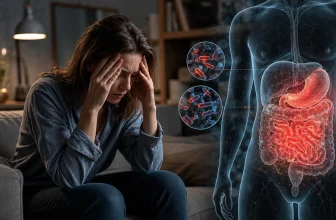
The relationship between your gut and your brain is no longer a fringe theory. Scientists now refer to it as the gut-brain axis, a bidirectional communication network that links your digestive system to your central nervous system in ways that directly influence mood, cognition, and sleep. If you have been struggling to get restful nights despite good sleep hygiene, your microbiome may be the missing piece.
What the microbiome actually does at night
Your gut microbiome does not clock out when you go to bed. During the night, microbial activity continues, influencing hormone regulation, immune responses, and the production of neuroactive compounds. Among the most significant of these is serotonin. Around 90% of the body’s serotonin is produced in the gut, and serotonin is the direct precursor to melatonin, the hormone that regulates your sleep-wake cycle.
When the diversity and balance of your gut bacteria decline, serotonin production can be disrupted. This creates a downstream effect on melatonin synthesis, making it harder for your body to transition naturally into sleep. Several strains of Lactobacillus and Bifidobacterium have been associated with better serotonin metabolism, which is one reason probiotic supplementation is increasingly studied in the context of sleep disorders.
GABA, tryptophan and the bacteria that produce them
Two other compounds deserve attention here: GABA and tryptophan. GABA is the primary inhibitory neurotransmitter in the brain. When GABA activity is low, the nervous system stays in a state of alertness, making deep sleep difficult to reach. Certain gut bacteria, particularly Lactobacillus rhamnosus, have been shown to influence GABA receptor expression in animal studies, with promising implications for human research.
Tryptophan is an essential amino acid that the body cannot produce on its own. It must come from food, but its absorption and conversion into serotonin and then melatonin depend heavily on the health of your gut lining. A compromised microbiome, characterised by low bacterial diversity or excess pathogenic bacteria, reduces the efficiency of tryptophan metabolism. Foods rich in tryptophan such as eggs, oily fish, pumpkin seeds and legumes become far less effective when the intestinal environment is dysbiotic.
Inflammation, dysbiosis and broken sleep
Chronic low-grade inflammation is one of the most underdiagnosed drivers of poor sleep. When the gut barrier is weakened, a condition often called intestinal permeability or leaky gut, bacterial endotoxins can enter the bloodstream and trigger systemic inflammatory responses. These responses activate the hypothalamic-pituitary-adrenal axis, increasing cortisol output at times when it should be falling.
Cortisol and melatonin operate on opposing rhythms. As one rises, the other falls. When gut dysbiosis sustains elevated cortisol into the evening, melatonin cannot rise effectively and sleep onset is delayed. This is not simply a matter of feeling wired at night. It represents a measurable hormonal imbalance with origins in the digestive tract.
The role of CBD and the endocannabinoid system
The endocannabinoid system plays a meaningful role in regulating both gut function and sleep. CB1 and CB2 receptors are found throughout the gastrointestinal tract, and endocannabinoid signalling influences gut motility, inflammation, and the permeability of the intestinal barrier. CBD interacts with this system indirectly, and early research suggests it may support gut homeostasis by modulating inflammatory pathways.
For people dealing with gut-related sleep disruption, some choose to buy CBD online as a complementary approach, particularly given CBD’s observed effects on anxiety and cortisol regulation. It is worth noting that research in this area is still developing, and CBD should be considered alongside dietary and lifestyle interventions rather than as a standalone fix.
Practical steps to support the gut-sleep axis
Improving your microbiome in favour of better sleep does not require dramatic changes. The most consistent evidence points to a few reliable strategies.
Increasing dietary fibre diversity is the most impactful starting point. Different bacterial species feed on different types of fibre, so eating a wide range of plants, including vegetables, legumes, wholegrains and fruits, supports a more diverse microbial community. Fermented foods such as kefir, live yoghurt, kimchi and sauerkraut introduce beneficial bacteria directly into the gut environment.
Prebiotic fibre, found in foods like chicory root, garlic, leeks and slightly underripe bananas, acts as fuel for the bacteria already present. Pairing prebiotic foods with probiotic sources creates a more favourable environment for the beneficial strains associated with serotonin and GABA production.
Timing of meals also matters. Eating late in the evening disrupts circadian-aligned digestive processes. The gut microbiome has its own circadian rhythm, and late-night feeding can shift microbial composition in ways that impair overnight recovery and hormonal regulation.
Finally, stress management is inseparable from gut health. Chronic psychological stress alters gut motility, reduces microbial diversity, and increases intestinal permeability. Practices that reduce stress load, whether breathwork, moderate exercise, or structured relaxation, have measurable positive effects on the gut-brain axis and, by extension, on sleep architecture.
A cyclical relationship worth taking seriously
Poor sleep degrades gut health, and a compromised gut makes sleep worse. Breaking this cycle requires addressing both sides simultaneously. Rather than treating insomnia as a neurological problem and digestive complaints as a separate concern, the evidence increasingly supports a unified approach rooted in microbiome health.
Understanding how your gut bacteria influence neurotransmitter production, inflammatory tone, and hormonal balance is one of the more powerful frameworks available for improving sleep naturally. It shifts the focus from sedation to restoration, from masking symptoms to addressing their metabolic origins.